Hitting Delete
How Embracing the Rewrite Changed My Life
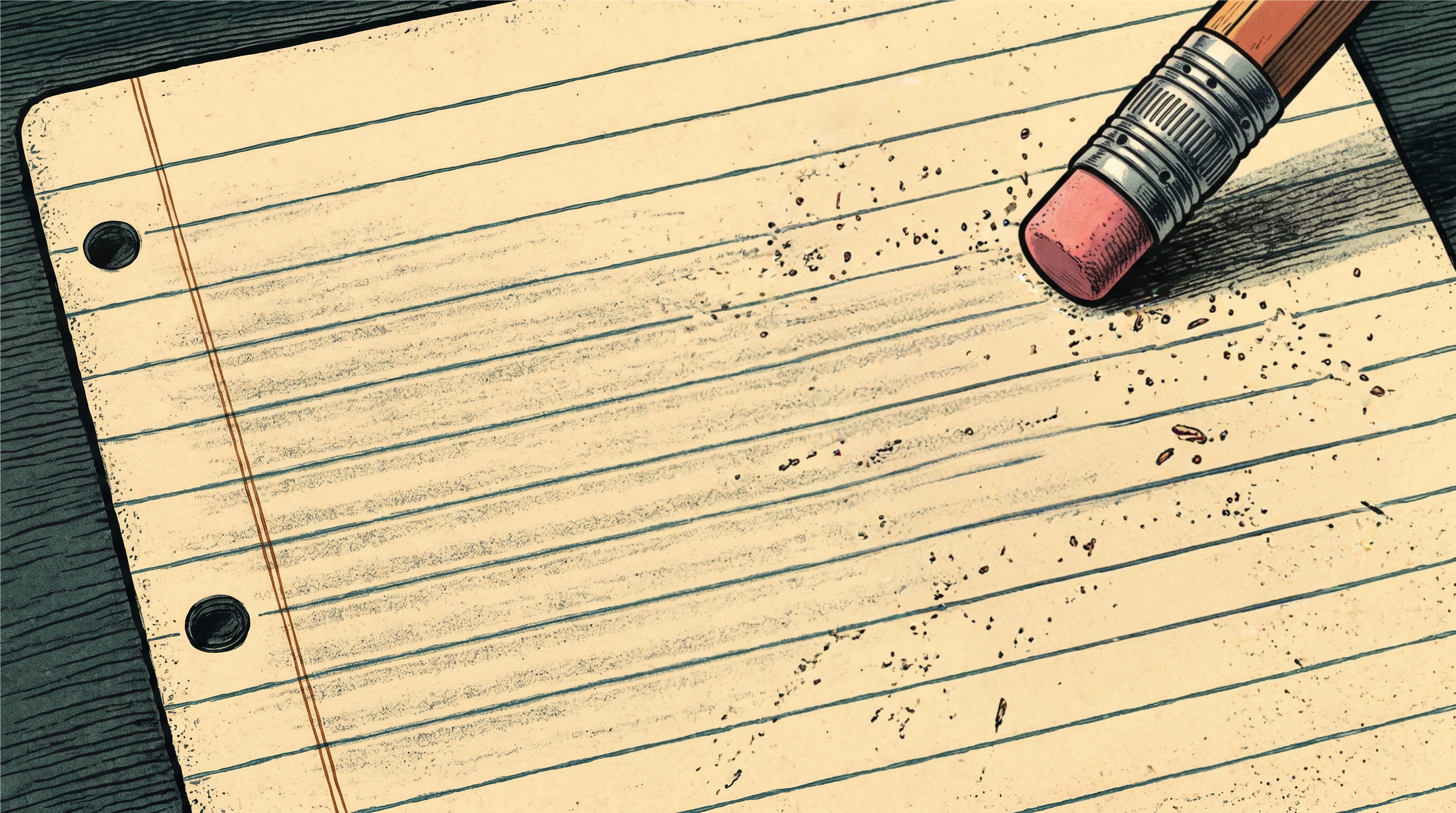
No one likes a rewrite.
Most writers, however, will eventually reach a state of acceptance for a rewrite - usually in much the same fashion as the Kubler-Ross grief model. After all, we got into this business knowing that the first draft wasn’t going to be the final draft. We knew the rewrite was imminent. But first we had to go through Anger, Denial, Bargaining and Depression.
While I always understood that rewriting was necessary, one of the aspects of rewriting that I railed against the most was rewriting something that to me was the essence of why I was writing the piece in the first place.
Let me try to rewrite that sentence to be more clear. What I couldn’t let go of was some scene or passage that had been with me since the idea’s inception. If this was the image that had inspired it all, how could I just then throw it out? What would be left?
And yet I had to develop the ability to do just that. “Kill your darlings,” as they say. And you know what? It was OK. The material even got better for it, and no one knew what was missing. And as I got more comfortable with hitting delete and moving on, I also came to learn another hard truth: the “final draft” was rarely the “final draft.” Not even close.
You are always going to be fiddling with something, right up until the time you hit “Publish,” or a director yells, “Action.” And even after that things change. There’s what an actor brings to the scene; what gets kept in editing; what makes it through studio notes. Once a movie premieres it’s not even the end; a director’s cut can be released. And then they reboot the whole series.
I grew to accept that anything I write is just the Ship of Theseus. Like the subject of the thought exercise, every piece of my scripts will be replaced with something else. The paradox asks us, “Is it still the same ship if everything is different?” Is it the same story if everything has been rewritten?
I got comfortable with rewrites when I discovered I had the ability to take any note that was thrown at me and not only find a way to address it, but still be delighted with what I had written. I could be surprised by my own imagination. There’s a sense of satisfaction in coming up against that challenge and solving it. It was less “How am I going to do this?” and more “What am I going to do next?” I began to no longer doubt that it could be done and instead became excited by what I would do.
That isn’t to say that when you’re working weekends, writing eight hours a day on a page one rewrite, and in desperate need of a shower, that it’s all a Doris Day movie. Rewriting is still hard work. I just approach it with less dread; I’m no longer fighting the idea of it.
Recently I’ve come to realize, developing this particular skill set would serve me well in all areas of life.
Keep reading with a 7-day free trial
Subscribe to Recipes for Resistance to keep reading this post and get 7 days of free access to the full post archives.